If you snore loudly, wake up gasping for air, or feel exhausted no matter how long you sleep, you might be dealing with obstructive sleep apnea—and you’re definitely not alone. Millions of Americans wrestle with this condition every night, and the two most common treatments are CPAP machines and custom oral appliances. But which one actually works better for you?
Let’s dive into the sleep apnea oral appliance vs CPAP debate so you can make an informed choice that fits your health, your comfort, and your real life.
What Is Obstructive Sleep Apnea and Why Does Treatment Matter?
Obstructive sleep apnea (OSA) happens when the muscles in your throat relax too much during sleep, temporarily blocking your airway. Your brain notices the drop in oxygen and wakes you up just enough to restart breathing—sometimes dozens or even hundreds of times each night.
Left untreated, sleep apnea doesn’t just leave you tired. According to the Centers for Disease Control and Prevention, chronic sleep disruption is linked to high blood pressure, heart disease, stroke, type 2 diabetes, and depression. That’s why finding a treatment you’ll actually use every single night is so important.
How Does a CPAP Machine Work?
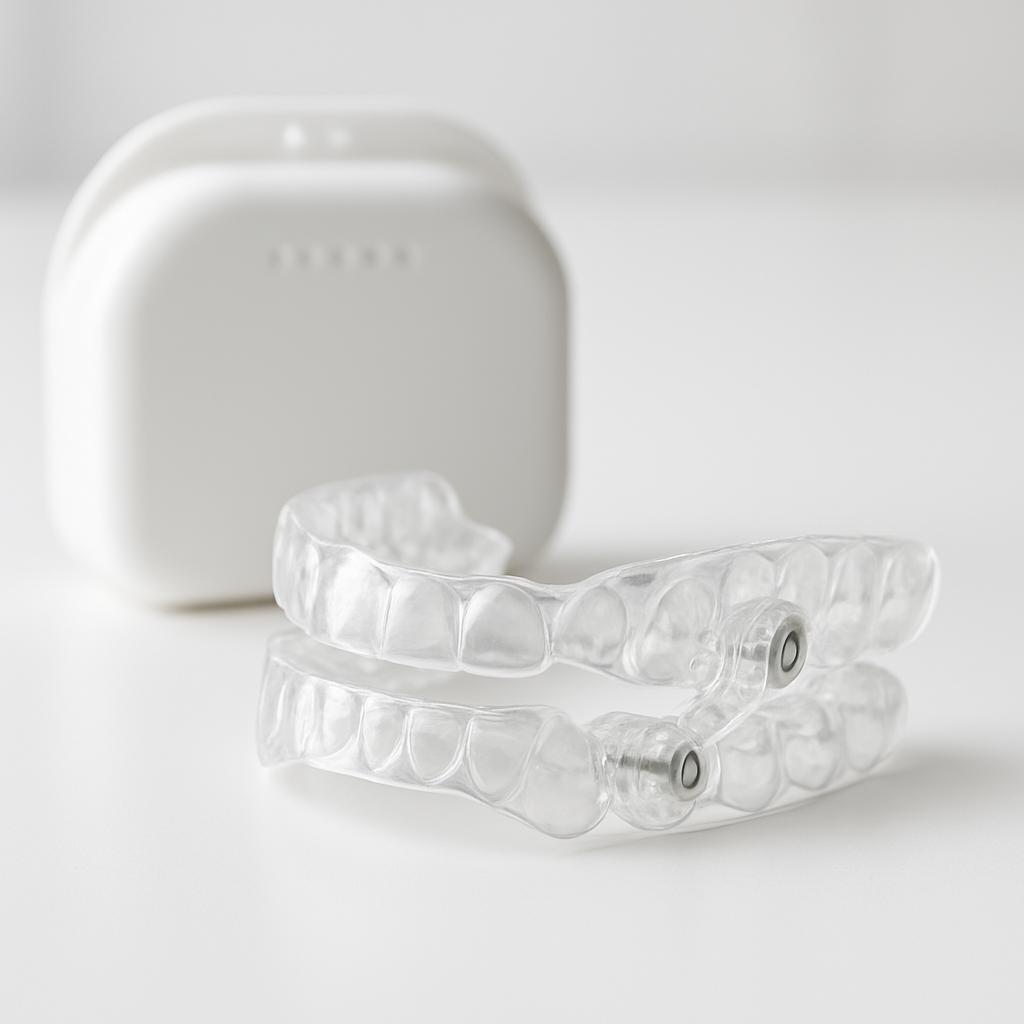
CPAP stands for Continuous Positive Airway Pressure. The machine delivers a steady stream of air through a mask you wear over your nose, mouth, or both. That gentle air pressure keeps your airway open all night long, preventing the collapses that cause apnea episodes.
CPAP is considered the gold standard for moderate to severe sleep apnea. It’s highly effective when used consistently, and modern machines are quieter and more comfortable than older models. Many come with heated humidifiers, auto-adjusting pressure settings, and data tracking so your doctor can monitor your progress.
But here’s the catch: compliance. Studies show that nearly half of CPAP users stop using their machines within the first year. The mask can feel claustrophobic, the noise bothers some sleepers (or their partners), and traveling with the equipment can be a hassle.
Sleep Apnea Oral Appliance vs CPAP: How Oral Appliances Work
An oral appliance for sleep apnea looks similar to a sports mouthguard or orthodontic retainer. Custom-fitted by a dentist, it works by gently repositioning your lower jaw and tongue forward while you sleep. This slight adjustment keeps your airway open naturally, without masks, hoses, or electricity.
There are two main types:
- Mandibular advancement devices (MADs): These nudge your lower jaw forward to prevent airway collapse.
- Tongue-retaining devices: These hold your tongue in a forward position using gentle suction.
The American Dental Association recognizes oral appliance therapy as an effective treatment option, especially for patients with mild to moderate obstructive sleep apnea or those who cannot tolerate CPAP.
Comparing Effectiveness: Sleep Apnea Oral Appliance vs CPAP
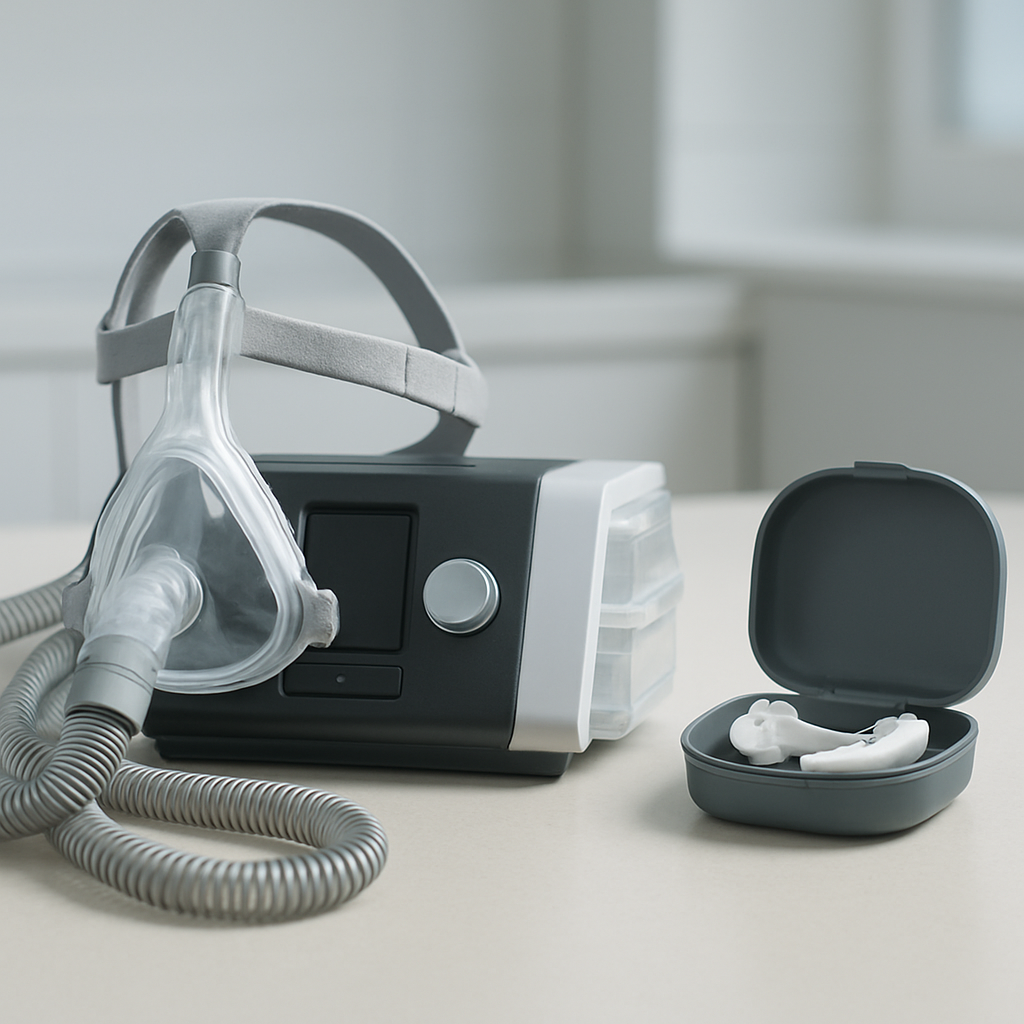
When it comes to pure effectiveness at reducing apnea events, CPAP generally wins for severe cases. It can eliminate nearly all apnea episodes when used correctly. However, effectiveness only matters if you actually use the device.
Here’s where oral appliances shine: patient compliance. Research published by the National Institutes of Health shows that people are significantly more likely to wear an oral appliance consistently compared to CPAP. And a treatment you use every night at 80% effectiveness beats a treatment you only use twice a week at 95% effectiveness.
For mild to moderate sleep apnea, oral appliances can be just as effective as CPAP in improving symptoms, reducing snoring, and protecting long-term health. Your dentist and sleep physician will help determine which option matches your specific apnea severity, anatomy, and lifestyle.
Comfort, Convenience, and Quality of Life
Let’s be honest: comfort matters. If a treatment makes you miserable, you won’t stick with it. Here’s how the sleep apnea oral appliance vs CPAP comparison stacks up in daily life:
Oral Appliance Advantages:
- No mask, hoses, or electricity required
- Compact and travel-friendly—fits in your pocket
- Silent operation (your partner will thank you)
- Easy to clean and maintain
- No claustrophobic sensations
- Works even during power outages
CPAP Advantages:
- More effective for severe apnea cases
- Can provide instant symptom relief
- Covered by most insurance plans when medically necessary
- Allows you to sleep in any position
- Modern models offer smart features and data tracking
Some patients do experience minor jaw discomfort or increased salivation when first using an oral appliance, but these side effects typically diminish within a few weeks as you adjust. Your dentist can make fine-tuning adjustments to maximize comfort.
Getting Started: How to Choose Between a Sleep Apnea Oral Appliance vs CPAP
The best choice depends on your individual situation. Here are some factors to discuss with your healthcare team:
- Severity of your apnea: Mild to moderate cases often respond beautifully to oral appliances; severe cases may need CPAP or combination therapy.
- Your anatomy: Certain jaw structures and dental conditions work better with one treatment over another.
- Previous CPAP experience: If you’ve tried CPAP and couldn’t tolerate it, an oral appliance might be your answer.
- Lifestyle and travel: Frequent travelers often prefer the portability of oral appliances.
- Bed partner’s input: CPAP noise and oral appliance effectiveness both matter to the person sleeping next to you.
At our practice, we work closely with sleep physicians to ensure you receive comprehensive care. We take precise impressions, custom-fit your appliance, and schedule follow-up appointments to verify it’s working effectively. We can also coordinate a follow-up sleep study to measure your improvement objectively.
Take the Next Step Toward Better Sleep
Living with untreated sleep apnea affects every part of your life—your energy, your mood, your relationships, and your long-term health. Whether you choose a sleep apnea oral appliance vs CPAP, the most important decision is to get treatment and use it consistently.
If you’re in the local area and curious whether an oral appliance might work for you, we’d love to help. Our team specializes in custom-fitted sleep apnea appliances and can evaluate your situation during a comfortable consultation. Give us a call or book an appointment online—better sleep might be closer than you think.