If you’re missing one or more teeth, you’ve probably heard that dental implants are the gold standard for replacement—but what about the price tag when you don’t have insurance coverage?
Understanding the dental implants cost without insurance can feel overwhelming at first, but knowing what goes into the pricing and what options exist can help you make an informed decision about your oral health. At our practice in the local area, we believe every patient deserves transparency when it comes to treatment costs, so let’s break down everything you need to know.
What Are Dental Implants and Why Do They Cost What They Do?
A dental implant is a titanium post surgically placed into your jawbone to act as an artificial tooth root. Once the implant fuses with the bone—a process called osseointegration—a custom crown is attached to restore function and appearance.
The cost reflects several factors:
- Surgical expertise: Implant placement requires specialized training and precision.
- High-quality materials: Medical-grade titanium and custom-fabricated crowns are built to last decades.
- Multi-step process: Most cases involve consultation, imaging, surgery, healing time, and final restoration.
- Advanced technology: 3D imaging, surgical guides, and digital impressions improve accuracy and outcomes.
According to the American Dental Association, implants have success rates exceeding 95% when properly placed and maintained, making them a long-term investment in your health.
Average Dental Implants Cost Without Insurance
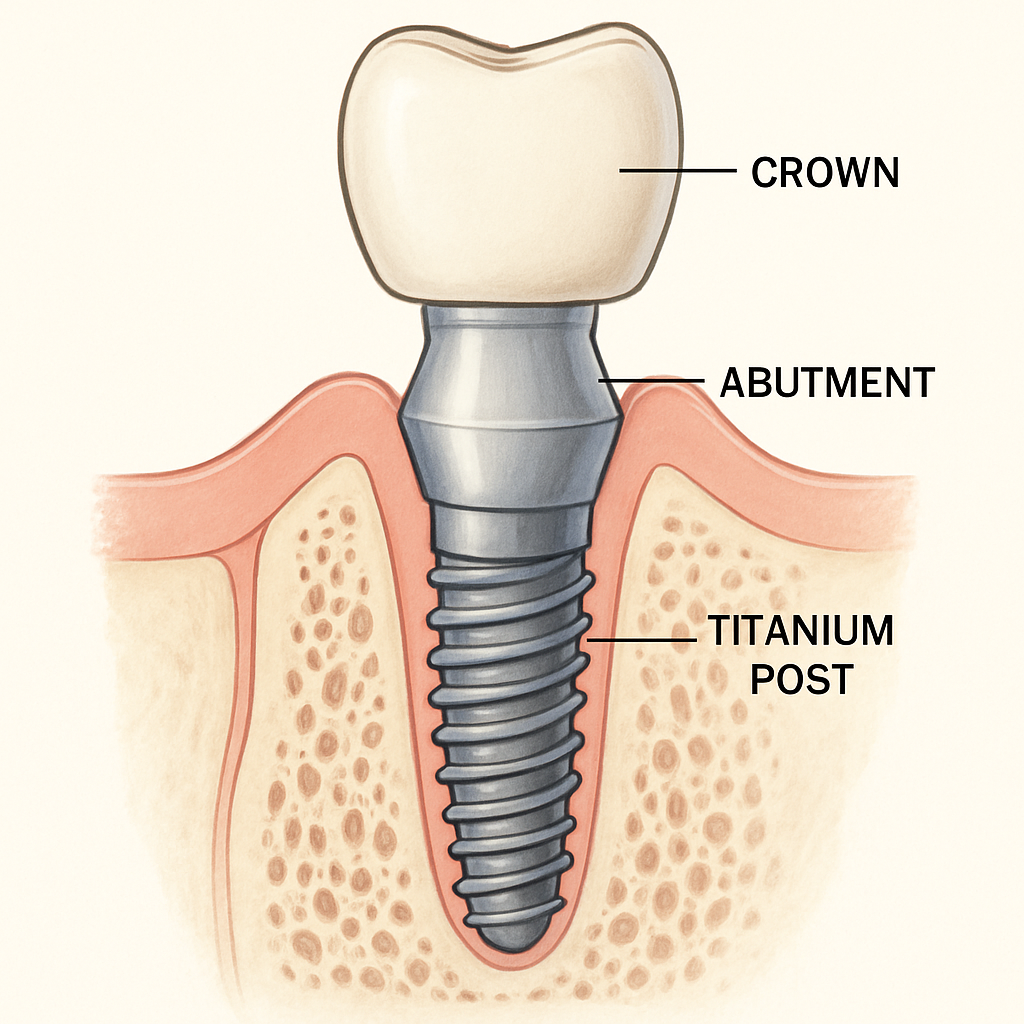
When paying out-of-pocket, the dental implants cost without insurance for a single tooth typically ranges from $3,000 to $6,000. This estimate usually includes:
- The implant post itself ($1,500–$2,500)
- The abutment connector piece ($300–$700)
- The crown restoration ($1,000–$3,000)
Keep in mind that these are national averages. Your total may vary based on:
- The complexity of your case
- Whether you need bone grafting or sinus lifts
- The type of crown material selected
- Geographic location and practice overhead
Multiple implants or full-arch restorations will naturally cost more, but per-tooth pricing often decreases when replacing several teeth at once.
Additional Procedures That May Affect Your Total Dental Implants Cost Without Insurance
Not every patient can proceed straight to implant placement. Some common preparatory treatments include:
Bone grafting: If your jawbone lacks sufficient density or volume, grafting builds up the area to support the implant. This can add $300–$1,200 per site.
Sinus lift: For upper back teeth, a sinus lift creates room for the implant without encroaching on sinus cavities. Expect $1,500–$3,000 depending on technique.
Tooth extraction: If the damaged tooth is still present, extraction is necessary first, typically costing $150–$400.
CT scans and imaging: Advanced 3D imaging ensures precise placement and may add $200–$500 to your workup.
During your consultation, we’ll perform a thorough examination and let you know exactly which steps apply to your situation—no surprises.
Financing and Payment Options to Make Implants More Accessible

The dental implants cost without insurance shouldn’t prevent you from getting the care you need. Many practices, including ours in the local area, offer flexible solutions:
In-house payment plans: Spread the cost over several months with low or zero interest, making treatment fit your budget.
Third-party financing: Companies like CareCredit and LendingClub offer healthcare credit lines with promotional periods and manageable monthly payments.
Dental savings plans: While not insurance, membership plans provide discounts on procedures for an annual fee.
Health Savings Accounts (HSAs) and Flexible Spending Accounts (FSAs): Use pre-tax dollars to pay for implants, reducing your effective cost.
We’re happy to discuss which option works best for your financial situation and help you navigate the paperwork.
Why Dental Implants Are Worth the Investment
When you compare the dental implants cost without insurance to alternatives like bridges or dentures, the value becomes clearer over time. Implants can last 25 years or more with proper care, while bridges typically need replacement every 10–15 years.
Beyond longevity, implants offer benefits that other options can’t match:
- Preserve jawbone: The implant stimulates bone just like a natural root, preventing the deterioration that occurs with missing teeth.
- Protect adjacent teeth: Unlike bridges, implants don’t require grinding down healthy neighboring teeth.
- Restore full function: Eat, speak, and smile with confidence—implants feel and perform like your own teeth.
- Improve overall health: According to research published on PubMed, tooth loss is associated with nutritional deficiencies and systemic health issues; replacing missing teeth supports better wellbeing.
When you factor in these advantages, the upfront cost represents a smart investment in both your smile and your quality of life.
Schedule Your Consultation in the Local Area
Understanding the dental implants cost without insurance is the first step toward reclaiming your smile. Every case is unique, and the only way to get an accurate estimate is through a personalized evaluation.
Our team is here to answer your questions, explain all your options, and work with you to create a treatment plan that fits your health goals and budget. Don’t let cost concerns keep you from exploring what’s possible—many patients are surprised by how affordable implants can be with the right payment plan.
Ready to learn more? Give us a call or visit our office in the local area to schedule your complimentary consultation. We’re committed to helping you make the best decision for your oral health, and we’ll be with you every step of the way.