If your dentist has mentioned you might need a “deep cleaning,” you’re probably wondering what that means—and whether it’s really necessary. Let’s clear up the confusion.
What Is Dental Deep Cleaning?
A dental deep cleaning, clinically known as scaling and root planing, is a non-surgical procedure that treats gum disease below the gumline. Unlike a regular cleaning that polishes visible tooth surfaces and removes plaque above the gums, a deep cleaning goes deeper to remove bacteria, tartar, and toxins that have accumulated in the pockets between your gums and teeth.
Think of it this way: a routine cleaning is preventive maintenance, while a deep cleaning is therapeutic treatment for gum disease that’s already begun. The procedure typically involves two steps—scaling to remove hardened deposits, and root planing to smooth the tooth roots so gums can reattach properly.
How Do I Know If I Need a Deep Cleaning?
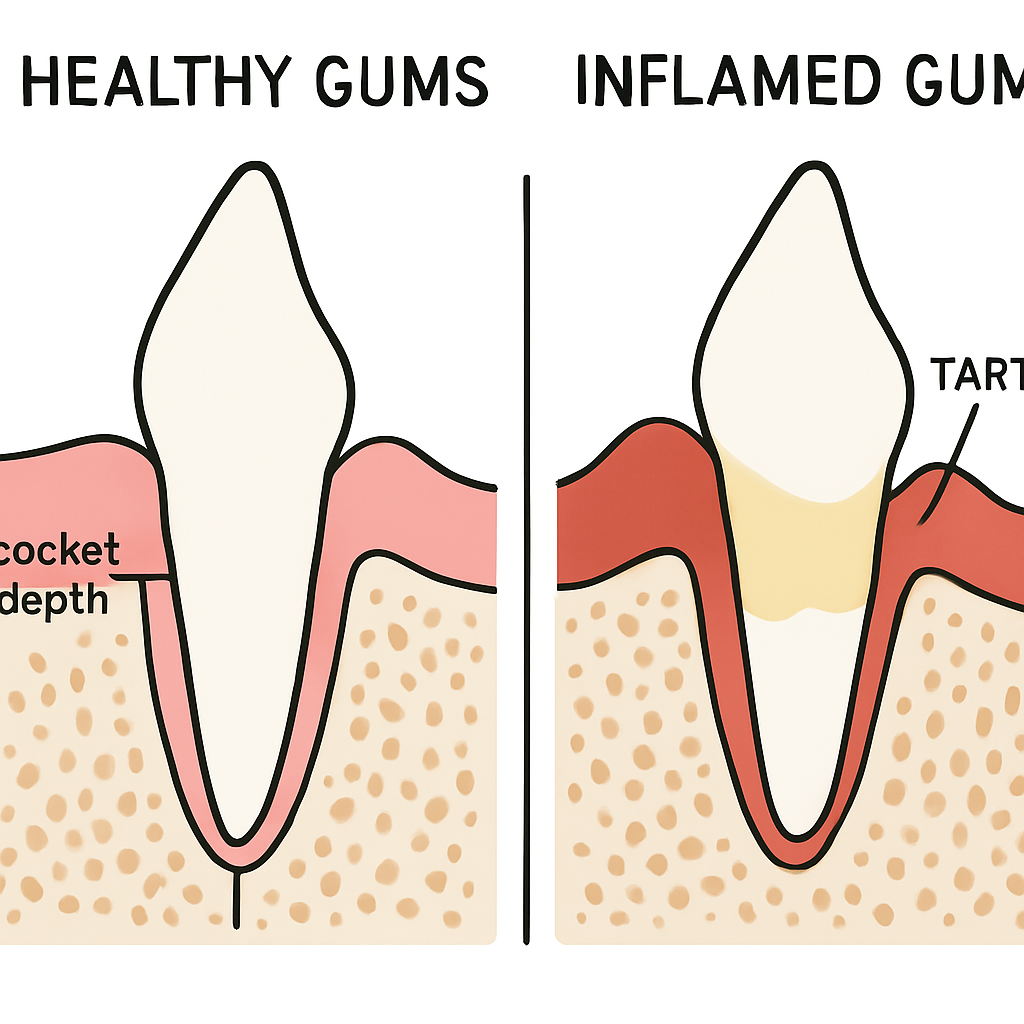
Your dentist will measure the depth of the pockets around your teeth using a small probe. Healthy gums have pockets measuring 1-3 millimeters deep. When pockets measure 4 millimeters or deeper, and there’s evidence of gum inflammation or bone loss, a deep cleaning is usually recommended.
Common signs that you might need what is dental deep cleaning include:
- Gums that bleed easily when you brush or floss
- Persistent bad breath that doesn’t go away
- Gums that look red, swollen, or puffy
- Gums that have pulled away from your teeth
- Loose or shifting teeth
- Visible tartar buildup along the gumline
According to the Centers for Disease Control and Prevention, nearly half of American adults aged 30 and older show some form of gum disease, making deep cleanings a common and important treatment.
What Happens During the Procedure?
Understanding what is dental deep cleaning involves knowing what to expect during your appointment. Most practices divide the treatment into two visits, working on one side of your mouth at a time so you can chew comfortably while healing.
Your dentist or hygienist will numb the treatment area with local anesthetic to keep you comfortable. Then they’ll use specialized instruments—sometimes ultrasonic scalers, sometimes hand tools—to carefully remove plaque and tartar from below your gumline and smooth the root surfaces.
The entire process for one side typically takes 45 minutes to an hour. You might feel pressure or vibration, but you shouldn’t feel pain during the procedure thanks to the anesthetic.
What’s the Difference Between Regular and Deep Cleaning?

This is one of the most common questions patients ask when trying to understand what is dental deep cleaning and why they can’t just have a regular cleaning instead.
Regular cleaning (prophylaxis): Performed on healthy gums, removes plaque and tartar above the gumline, typically takes 30-45 minutes, usually doesn’t require anesthetic, and is recommended every six months for prevention.
Deep cleaning (scaling and root planing): Treats active gum disease, removes deposits below the gumline, smooths tooth roots, requires local anesthetic, may need two appointments, and is followed by more frequent maintenance cleanings.
The American Dental Association emphasizes that deep cleaning is a necessary treatment, not an optional upgrade, when gum disease is present.
Will It Hurt? What About Recovery?
Most patients experience minimal discomfort during the procedure itself thanks to local anesthesia. Afterward, you might notice some tenderness or sensitivity for a few days, especially to cold temperatures. Your gums may feel a bit sore, similar to how your mouth feels after flossing really well for the first time in a while.
Here’s how to make recovery smoother:
- Take over-the-counter pain reliever as recommended by your dentist
- Stick to soft foods for the first 24 hours
- Avoid extremely hot or cold foods and drinks initially
- Continue gentle brushing and flossing (your dentist will show you proper technique)
- Rinse with warm salt water if recommended
- Avoid smoking, which significantly impairs healing
Most patients feel back to normal within a week, though complete healing of the gum tissue takes several weeks.
What Happens If I Skip the Deep Cleaning?
If your dentist recommends a deep cleaning and you postpone or avoid it, the gum disease will progress. Early-stage gum disease (gingivitis) is reversible, but once it advances to periodontitis, the damage to bone and tissue becomes permanent.
Untreated gum disease can lead to tooth loss, bone deterioration, and has been linked by researchers at institutions like the Mayo Clinic to increased risk of heart disease, diabetes complications, and other systemic health issues. The bacteria from infected gums can enter your bloodstream and affect your overall health.
A deep cleaning stops the progression, gives your gums a chance to heal, and helps you keep your natural teeth longer. Think of it as an investment in both your oral and overall health.
If you’re experiencing any signs of gum disease or have questions about whether you might need what is dental deep cleaning, the team at the practice is here to help. We serve patients throughout the local area with comprehensive general and cosmetic dentistry services. Give us a call today to schedule an evaluation—your gums will thank you.