
Did you know that the average adult now wears braces or aligners for 12-18 months, but the total cost can vary by thousands of dollars depending on which system you choose?
If you’re weighing your options for straightening your teeth in 2025, understanding the true Invisalign vs braces cost picture—and how long each treatment takes—will help you make a confident, informed decision. Let’s break down the numbers, timelines, and key differences so you know exactly what to expect.
What Affects Invisalign vs Braces Cost in 2025?
Both Invisalign clear aligners and traditional metal braces have come down in price over the past decade, but several factors still influence what you’ll actually pay:
- Complexity of your case: Minor crowding or spacing costs less to correct than severe bite issues or rotated teeth.
- Treatment length: Longer plans mean more aligners or more adjustment visits, which can increase fees.
- Geographic location: Practices in metropolitan areas often charge more than those in smaller communities.
- Insurance coverage: Many dental plans now cover up to $1,500–$2,000 for orthodontics, whether you choose braces or Invisalign.
- Provider experience: Orthodontists and dentists with advanced Invisalign certification may charge a premium for expertise.
On average in 2025, traditional metal braces range from $3,000 to $7,000, while Invisalign typically runs $3,500 to $8,000. Ceramic (clear) braces fall somewhere in between, often costing $4,000 to $8,000. The overlap in pricing means cost alone shouldn’t be your only deciding factor—lifestyle, comfort, and treatment goals matter just as much.
Understanding the Invisalign vs Braces Cost Breakdown
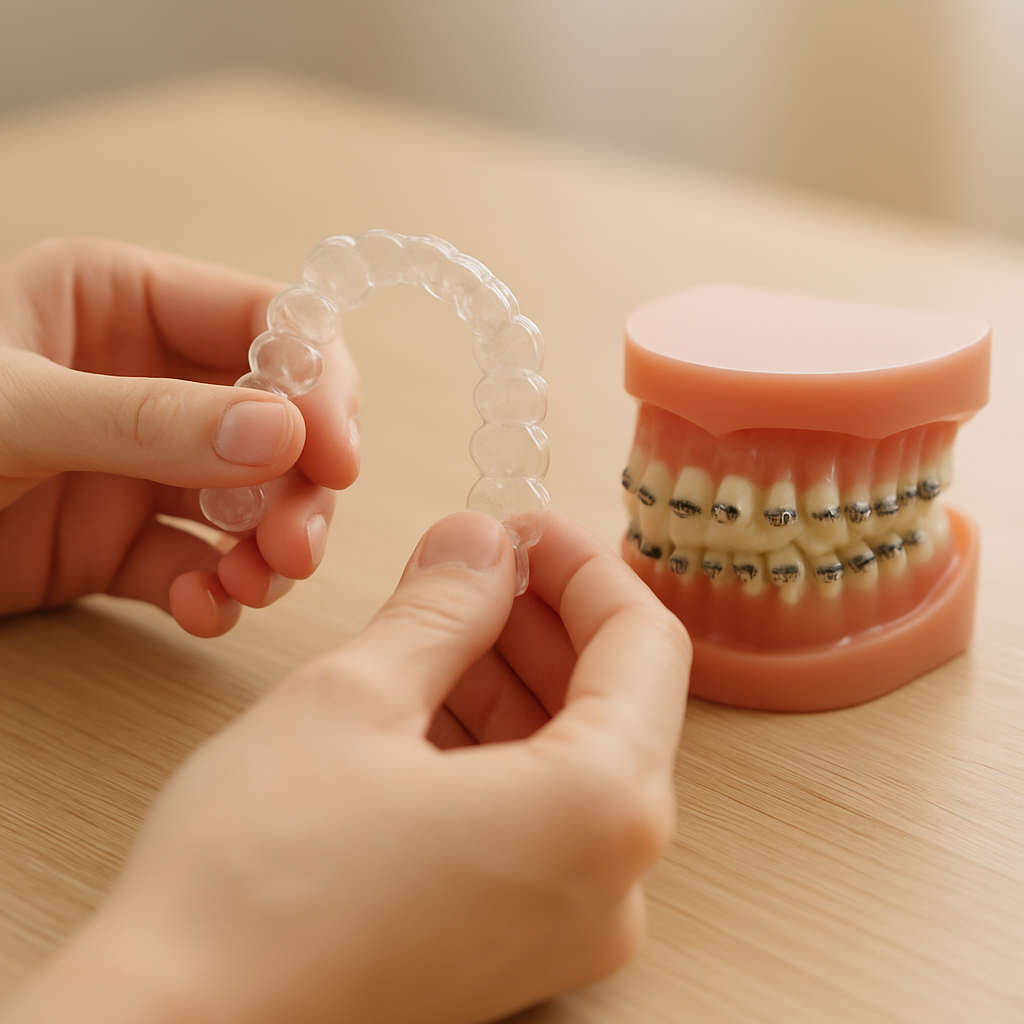
When practices quote a fee, here’s what’s usually included:
- Initial consultation and records: X-rays, photos, and digital scans or impressions to map your treatment.
- Appliances: The braces hardware and wires, or the full series of custom Invisalign trays.
- Office visits: Regular adjustments every 4–8 weeks for braces; progress checks every 6–10 weeks for Invisalign.
- Retainers: After active treatment, you’ll need retainers to keep teeth in place—sometimes included, sometimes an additional $200–$500.
Some practices offer in-house financing with zero or low interest, and third-party plans like CareCredit can spread payments over 12–24 months. Always ask for a written treatment estimate that itemizes what’s covered, so there are no surprises down the road.
Treatment Timelines: How Long Will You Wear Them?
Speed matters when you’re planning a wedding, job interview season, or simply want your smile sooner. Here’s the general timeline for each option:
Traditional braces: Most patients wear metal braces for 18 to 24 months, though simpler cases may finish in 12 months and complex cases can extend to 36 months. You’ll visit the office every 4–6 weeks for wire adjustments.
Invisalign: The average Invisalign case takes 12 to 18 months, with trays swapped at home every 1–2 weeks. Mild crowding might resolve in as little as 6 months with Invisalign Express, while comprehensive cases can take up to 24 months. Check-ins happen every 6–10 weeks, so fewer office trips overall.
Both systems require full-time wear—braces are fixed in place, and Invisalign must be worn 20–22 hours per day to stay on schedule. Skipping wear time or missing appointments can add months to your treatment.
Lifestyle and Comfort: Beyond the Price Tag
Cost and time are critical, but day-to-day experience plays a huge role in satisfaction. According to the American Dental Association, patient compliance is one of the strongest predictors of treatment success—so choose the option you’ll actually stick with.
Invisalign advantages:
- Removable for meals, so no food restrictions
- Easier brushing and flossing
- Clear trays are nearly invisible in photos and video calls
- Fewer mouth sores from brackets and wires
Traditional braces advantages:
- No temptation to skip wear time—they work 24/7
- Often better for complex bite corrections and severe rotations
- No trays to lose or forget when traveling
- Colorful bands let kids and teens express personality
If you play contact sports, drink coffee or red wine frequently, or worry about losing small appliances, braces might be more practical. If discretion and convenience top your list, Invisalign often wins out.
Which Option Delivers Better Results?
Both Invisalign and braces can produce excellent outcomes when prescribed appropriately. Research published on PubMed shows comparable results for mild to moderate crowding, spacing, and bite issues. Traditional braces still hold an edge for very severe malocclusions, significant rotations, and cases requiring tooth extraction.
Your provider will evaluate your bite, jaw alignment, and specific goals during the consultation. Some practices even offer digital treatment previews—Invisalign’s ClinCheck software and braces simulation tools let you see projected results before you commit.
Making the Decision: Cost, Time, and Your Smile Goals
There’s no universal “better” choice when comparing Invisalign vs braces cost and timelines in 2025—only the right fit for your situation. If budget is tight and your case is straightforward, traditional braces may offer the best value. If you prioritize aesthetics and flexibility, Invisalign’s premium might be worth it. And if you’re somewhere in between, ceramic braces or hybrid treatment plans can split the difference.
The good news? Practices in the local area now offer more payment options, insurance coordination, and advanced technology than ever before. Booking a consultation gives you a personalized cost estimate, a clear timeline, and the chance to ask every question on your mind—no obligation, no pressure.
Ready to explore your options and get a custom treatment plan? Call the practice today to schedule your complimentary orthodontic consultation and take the first step toward the smile you’ve always wanted.